
Your Guide to Vacaville Homes for Sale: Insights for 2026 Buyers
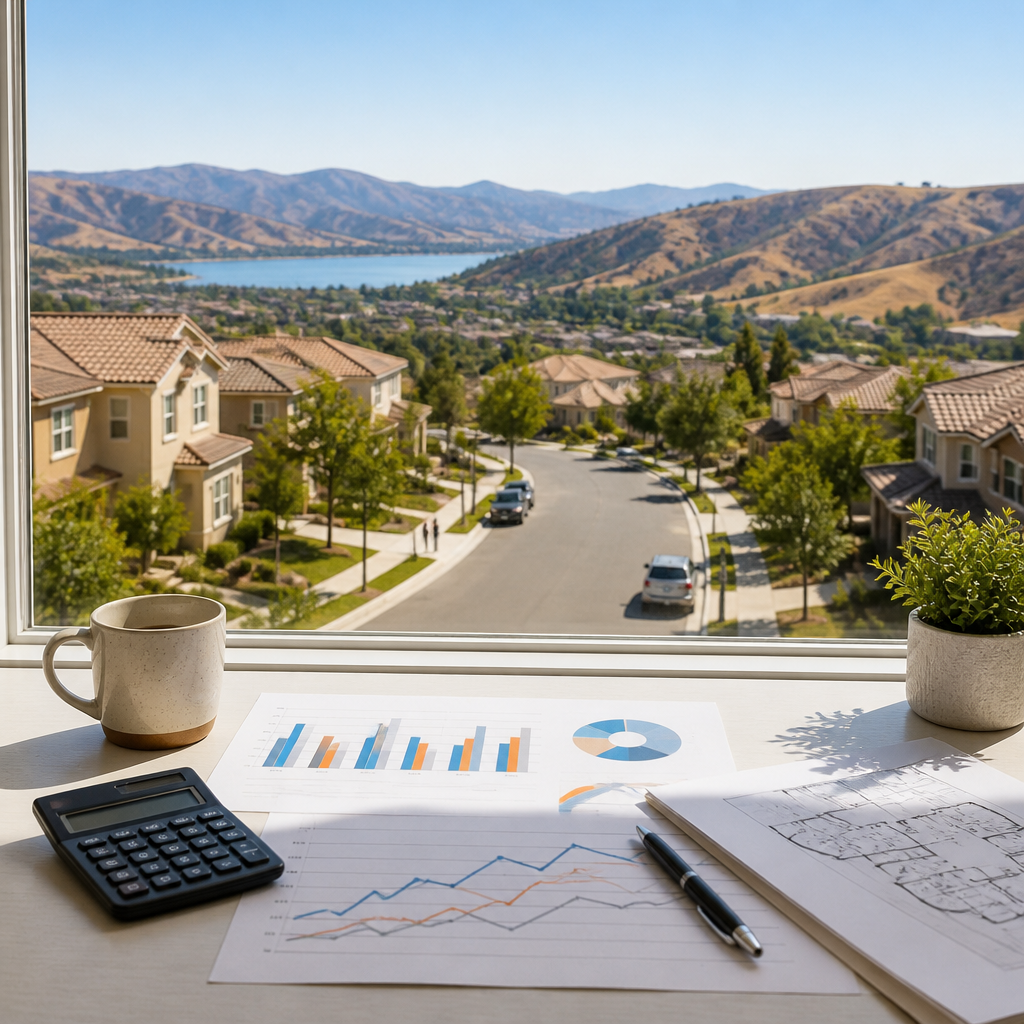
Vacaville homes for sale continue to attract Bay Area and Sacramento buyers seeking space, schools, and relative affordability. According to Redfin, the typical Vacaville home has been selling in a range around the low- to mid-$600,000s as of mid-2025, with properties often going pending in roughly 20 to 30 days. This guide examines neighborhoods, schools, commutes, and buyer strategies so that 2026 purchasers can approach Vacaville’s evolving market with clear, data-informed expectations.
How is the 2026 market shaping up for Vacaville homes for sale?
Vacaville sits at a strategic midpoint between San Francisco and Sacramento, about 55 miles from downtown San Francisco and roughly 35 miles from downtown Sacramento along Interstate 80. That location keeps demand steady for Vacaville homes for sale from commuters in both directions. According to Realtor.com, listing inventory has generally hovered between 150 and 250 active homes in recent seasons, a level that tends to support moderate competition rather than extreme bidding wars.
Pricing trends remain a central focus for 2026 buyers. Based on data from Zillow through early 2025, Vacaville home values have moved in a band from roughly 8% to 15% above pre-2020 levels, reflecting regional price growth while still under major Bay Area suburbs. Entry-level three-bedroom homes frequently trade between $550,000 and $675,000, while newer construction in southeast Vacaville and larger properties off Leisure Town Road command higher figures.
Market pace also shapes strategy. According to Redfin, a typical Vacaville property has recently spent about 25 to 35 days on market, shorter for well-priced homes near Downtown Vacaville and Vacaville High School. Roughly 30% to 40% of listings have sold above list price in recent quarters, indicating that sharp pricing and prepared buyers still matter, especially for updated homes along Alamo Drive and in the Browns Valley area.
Which Vacaville neighborhoods and streets stand out to 2026 buyers?
Downtown Vacaville around Main Street, Merchant Street, and Davis Street holds strong appeal for those prioritizing character and walkability. Historic bungalows and cottages share blocks with newer townhomes near Andrews Park and Town Square. According to Walk Score, central Vacaville posts walk scores in the 60s, significantly higher than outlying subdivisions. Homes within a half-mile of Andrews Park, Ulatis Creek, and the Vacaville Performing Arts Theatre often draw attention from buyers seeking coffee shops, restaurants, and community events within a short stroll.
Browns Valley, stretching along Browns Valley Parkway and Gibson Canyon Road, attracts buyers looking for larger lots and hillside views. Many homes here were built in the 1980s and 1990s, with some newer infill construction. Properties near Browns Valley Elementary and Ridgeview Park tend to list in the mid- to upper-$700,000s, with some view homes exceeding $900,000. According to Realtor.com’s Browns Valley overview, this pocket often carries a premium over more central tracts due to lot size and perceived privacy.
Evening walks through Downtown Vacaville along Main Street offer a clear sense of the area’s atmosphere. The warm glow from restaurants near Pure Grain Bakery and Fuso Italian Restaurant reflects off brick storefronts, while the scent of grilled food drifts in from patios by Andrews Park. The sound of live music during seasonal events echoes under the decorative lights spanning the street, giving nearby homes a distinctly urban-small-town feel that differs from quieter cul-de-sacs off Elmira Road or Nut Tree Road.
What do schools, parks, and amenities add to Vacaville homes for sale?
School performance remains a major driver for Vacaville homes for sale. Vacaville High School near West Monte Vista Avenue anchors many central neighborhoods, while Will C. Wood High School along Gibson Canyon Road serves southeastern tracts. According to GreatSchools, several Vacaville campuses, including Sierra Vista K-8 on Bel Air Drive, earn ratings in the 7/10 to 9/10 range, which often translates into stronger resale demand and narrower price discounts during slower market periods.
Parks and open space also shape buyer decisions. Peña Adobe Regional Park and Lagoon Valley Park, southwest of Interstate 80, provide miles of trails, a scenic lagoon, and access to hills overlooking the city. The City of Vacaville notes on its Parks and Recreation page that the community maintains more than 30 neighborhood parks, including Meadowlands Park near Alamo Drive and Nelson Park close to Marshall Road. Homes within walking distance of these parks frequently attract families and outdoor-focused buyers.
Weekend mornings at Peña Adobe Regional Park bring a mix of crisp air and the earthy scent of oak trees after irrigation. Gravel crunches under running shoes along the Lagoon Valley Park trail as cyclists pass, while the surface of Lagoon Valley Lake reflects pale gold light from the surrounding hills. Laughter from picnics near the historic Peña Adobe building blends with distant highway hum, giving nearby neighborhoods along Cherry Glen Road and Butcher Road a strong connection to open space.
How do commute routes and future growth influence Vacaville homes for sale?
Vacaville’s transportation network remains central to its housing appeal. Interstate 80 runs east–west along the city’s southern edge, connecting residents to Fairfield within about 10 minutes and to Sacramento in roughly 35 to 45 minutes, depending on traffic. Interstate 505 branches north, providing access to Winters and Woodland. According to the City of Vacaville Transportation information, local bus service through Vacaville City Coach links neighborhoods near Elmira Road, Peabody Road, and Leisure Town Road to employment centers, shopping, and medical facilities.
Growth corridors influence both current pricing and long-term potential. Development east of Leisure Town Road has produced newer subdivisions near the Vacaville Premium Outlets and Kaiser Permanente Vacaville Medical Center. As of early 2025, Zillow data indicates that many of these newer homes have sold in the upper-$600,000s to mid-$800,000s, with select larger properties and small-acreage estates in the surrounding countryside occasionally approaching $2.4M. Such outliers help define an upper ceiling for the broader Vacaville market.
Planned infrastructure and employment projects further shape expectations for Vacaville homes for sale. The city’s economic development materials on the City of Vacaville Economic Development page highlight biotechnology, manufacturing, and logistics as ongoing priorities around the Vaca Valley Parkway and the Interchange Business Park. As additional facilities come online, housing near Vaca Valley Parkway, Ulatis Drive, and the Vacaville Transportation Center may benefit from shortened commutes and stronger weekday demand.
What strategies help 2026 buyers compete for Vacaville homes for sale?
Financing readiness remains essential for buyers targeting Vacaville homes for sale in 2026. According to guidance from Consumer Financial Protection Bureau, conventional loans often favor borrowers with at least 5% down, while FHA loans permit minimum down payments as low as 3.5%. In a market where many homes still receive multiple offers, fully underwritten pre-approval letters and clear documentation of funds can distinguish one buyer’s offer from a competing proposal with similar price terms.
Solano County’s property tax environment also factors into long-term affordability calculations. Based on estimates from SmartAsset, effective property tax rates in Solano County often range from about 0.8% to 1.1% of assessed value annually. For a Vacaville home priced around $650,000, that can translate into an annual tax bill between roughly $5,200 and $7,200, depending on exact assessment and voter-approved measures in specific neighborhoods.
Offer structure plays a critical role when desirable homes near Nut Tree Plaza, Vacaville Premium Outlets, or the Ulatis Community Center hit the market. According to Redfin, roughly 20% to 30% of recent Vacaville sales have involved concessions from sellers, such as closing cost credits or rate buydowns, while another 20% have sold significantly above list price. Targeted use of inspection contingency timelines, appraisal gap coverage, and flexible rent-back terms can help align buyer goals with seller priorities.
The median Vacaville sale price around the low- to mid-$600,000s cited at the start of this guide reflects a market that still offers relative value compared with many Bay Area suburbs, while signaling that hesitation can quickly price out borderline buyers as demand ebbs and flows. That same figure from the opening underscores how even modest rate shifts can change monthly affordability calculations. The Bay Area Real Estate Information Services MLS provides detailed, up-to-date statistics that local professionals use to track these shifts week by week. Buyers who register listing alerts through MLS-connected portals in late winter and commit to touring qualified homes within 24 to 48 hours of hitting the market before the spring surge in March and April tend to secure stronger positions, while those delaying decisions until after Q2 often face thinner inventories, higher prices, and fewer favorable financing opportunities.
FROM OUR BLOG
Exploring Luxury Homes in Westridge, Calabasas: A 2026 Buyer’s Guide
Exploring Luxury Homes in Westridge, Calabasas: A 2026 Buyer’s Guide Luxury homes in Westridge, Calabasas draw sustained interest heading into 2026 as supply stays tight and listing times remain relatively short. According to Redfin, Calabasas single-family homes have recently averaged between 30 an
Moving to Tesoro del Valle, Valencia: Essential Tips for New Residents
Moving to Tesoro del Valle, Valencia: Essential Tips for New Residents Moving to Tesoro del Valle, Valencia means entering one of Santa Clarita’s most planned hilltop communities, with access to trails, parks, and HOA amenities. According to Redfin, homes in Tesoro del Valle typically range between